01
Understand the whole
We assess slopes, joints, materials and visible condition to define the work areas.

08 / ROOFS AND STRUCTURES
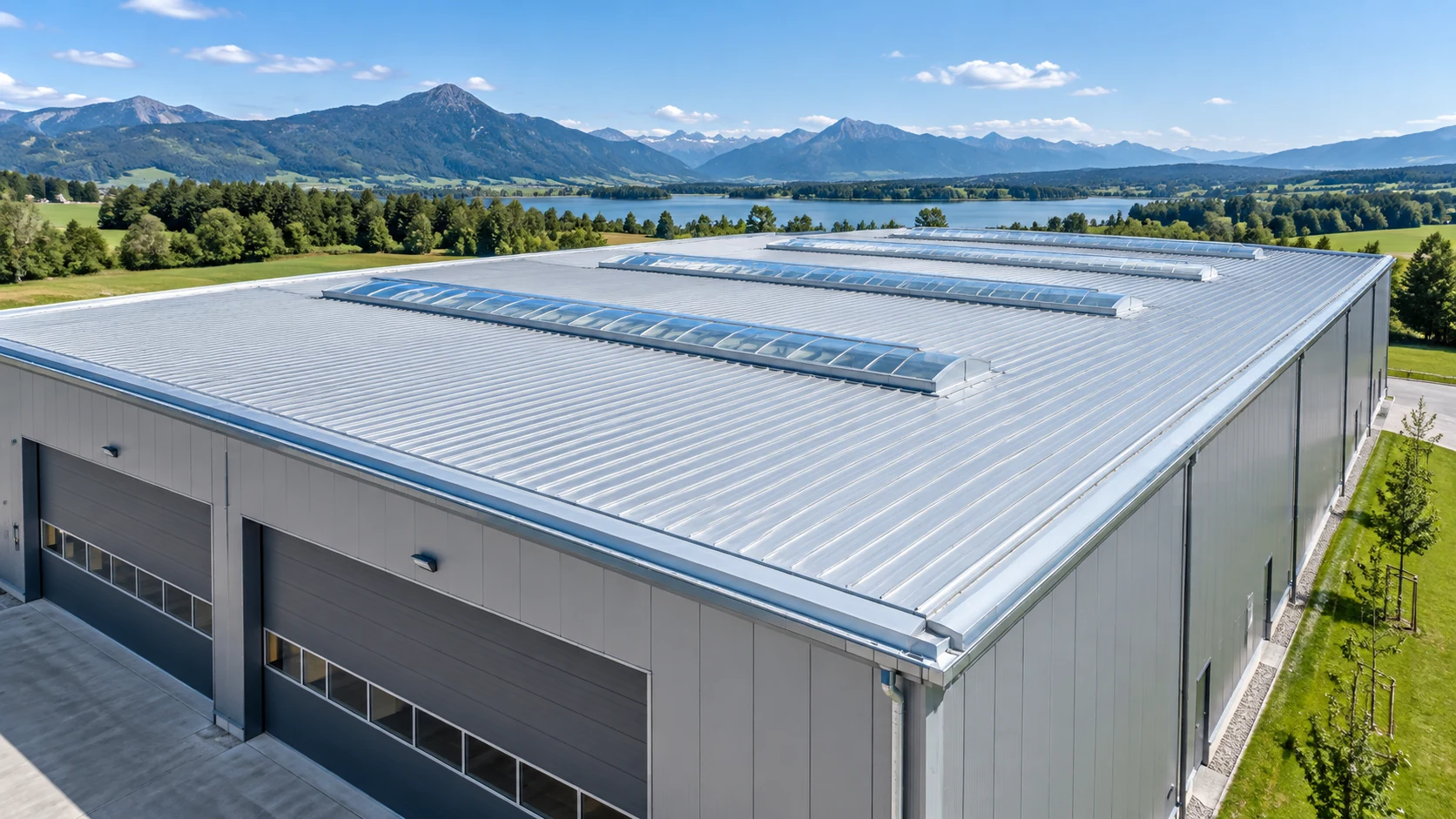
Cleaning roofs, canopies, enclosures and elevated features. Buildings and industrial structures with a method adapted to their shape, materials and access.
OUR APPROACH
A facility brings together very different surfaces. We study what each area needs and how to work on it, from exterior cladding to roofs and exposed components.
THE SCOPE
We propose a scope by area to organise the work and distinguish surfaces suitable for drones from those requiring ground-based support or other equipment.
HOW WE WORK
We assess slopes, joints, materials and visible condition to define the work areas.
We combine drones with complementary equipment when the geometry and surroundings call for it.
We adapt the application to each material and plan the work around the building's activity.
PREVENTION AND EFFICIENCY
In suitable areas, the drone allows cleaning from the ground, avoiding exposure to work at height. Reducing rooftop access and supporting equipment can also lower preparation costs.
Every operation still requires its own risk assessment, safety coordination and the permits applicable to the work and the site.
Safety, planning and savingsBEFORE WE START
We assess the request by area and material. The quote identifies the included elements and the planned method. Repairs, waterproofing and other maintenance work are not part of cleaning unless specifically agreed.
Poles with a reach of up to 20 metres complement the drone in areas where they are suitable. This height refers to the poles; the feasibility of drone work is assessed separately. The 20-metre reach applies exclusively to the poles; the drone’s working height is assessed for each intervention.
Yes. An initial visual inspection can help document the condition and identify areas requiring a closer review. The scope and deliverables are agreed before it is carried out.
THE NEXT STEP